
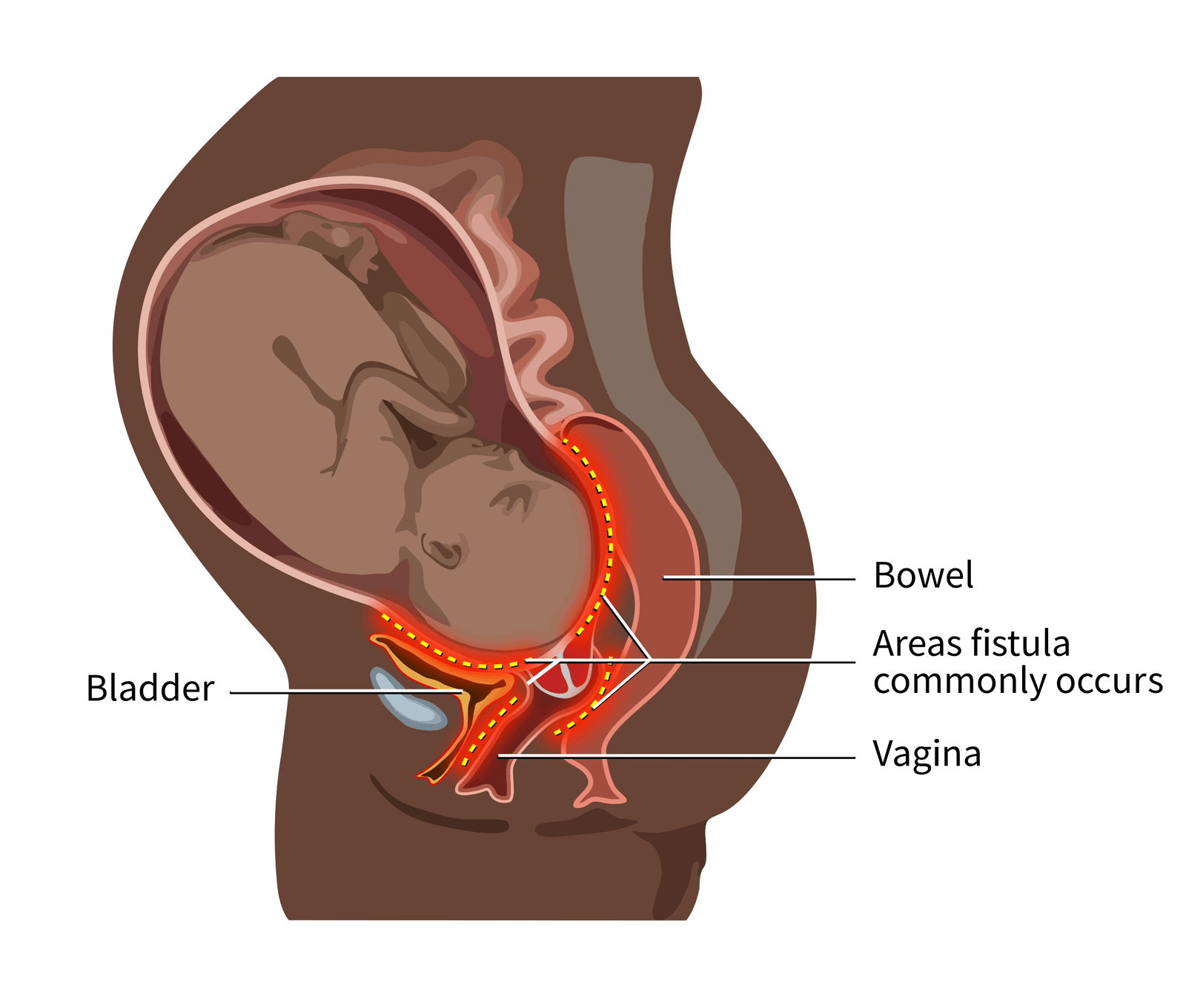
Obstetric fistula is one of the most devastating and yet most preventable childbirth injuries affecting women around the world—especially in underserved communities across Africa. Despite its severity, it remains largely unknown to many, hidden in silence and stigma. At The Beauty of Afrikan Sisterhood, we believe that awareness is the first step toward action and healing. So, what exactly is an obstetric fistula, and why does it matter?
Understanding Obstetric Fistula
An obstetric fistula is a hole that forms between a woman’s birth canal and bladder and/or rectum, most commonly caused by prolonged, obstructed labor without timely medical intervention such as a cesarean section. When labor lasts too long—sometimes days—the pressure of the baby’s head against the pelvic bones cuts off blood supply to surrounding tissue. This tissue dies and breaks down, creating an opening (or “fistula”) that causes uncontrollable leakage of urine and/or feces.
The Impact on Women
Beyond the physical pain, obstetric fistula has profound emotional, psychological, and social effects. Women who suffer from it often experience chronic infections, infertility, and social isolation. In many communities, they are abandoned by their husbands, shunned by family, and excluded from public life due to the constant odor and stigma associated with the condition.
But it’s important to remember: this condition is not caused by a woman’s actions—it is a reflection of gaps in access to safe maternal healthcare, especially in rural or resource-limited areas.
Obstetric Fistula Is Treatable—and Preventable
The good news is that obstetric fistula can be repaired through surgery, and with proper medical care, many women go on to live full, healthy lives. Prevention is equally vital and achievable through timely access to quality maternal healthcare, skilled birth attendants, and cesarean delivery when necessary.
At The Beauty of Afrikan Sisterhood, we work to ensure that women receive the care, dignity, and support they deserve—before, during, and after childbirth. Through awareness campaigns, funding for surgeries, and holistic recovery support, we aim to restore more than just health—we restore hope.
How You Can Help
By supporting our work, you help women regain their lives. Your donations fund surgeries, post-operative care, and community education programs that break the cycle of silence and shame. Together, we can ensure that no woman suffers in isolation from a condition that can be both prevented and healed.
Obstetric fistula is a childbirth injury caused by a prolonged or obstructed labor. It is a hole between the birth canal and the bladder and/or rectum and occurs without access to emergency medical care.
Cause
- When a woman is in labor for days without adequate care, the baby’s head presses against the birth canal, cutting off blood flow.
- The tissue dies, and a hole (fistula) form.
- This leaves the woman with chronic incontinence of urine and/feces.
- The ability to maintain adequate hygiene becomes challenging leading to social alienation and ostracism.
What are the most common types of obstetric fistulas?
Vesico-vaginal fistula (VVF) – hole and abnormal communication between the bladder and the vagina
Rectovaginal fistula (RVF) – hole and abnormal communication between the rectum and the vagina
What is obstructed labor?
Obstructed labor is the inability of the fetus to be delivered caused by fetal malpresentation or more commonly fetal head to pelvis ratio is unbalanced also known as cephalopelvic disproportionate. Simply put the baby’s head to either too large to pass through the pelvis or the pelvis is too narrow to accommodate the baby’s head.
When does an obstetric fistula occur? Most develop within 2 weeks of delivery and in some cases it may occur immediately after delivery.
What happens if the obstructed labor occurs?
After 24 to 72 hours in labor eventually the baby delivers but the result is often a Stillbirth. Due to the constant pressure of the head in the pelvis, blood flow to the pelvic tissues are reduced or stopped altogether. (No tissue perfusion) This eventually leads to the death of the tissue and necrosis develops. The tissue breaks down leaving a small HOLE.
What is the obstructed labor injury complex? It is a constellation of injuries that touch all areas such as urologic, gynecologic, gastrointestinal, musculoskeletal, neurologic, dermatologic, fetal, and social. A few specific problems that can result from having an OF are the following:
- Renal failure
- Secondary infertility
- Foot drop from nerve injury
- Vaginal stenosis
- Chronic skin maceration
- Vaginal stenosis (source Arrowsmith, 1996)
- Anal sphincter incompetence
Reproduced with permission from: Arrowsmith S, Hamlin EC, Wall LL. Obstructed labor injury complex: obstetric fistula formation and the multifaceted morbidity of maternal birth trauma in the developing world. Obstet Gynecol Surv 1996; 51:568.
Copyright © 2012 Lippincott Williams & Wilkins.
Don’t need permission from this because I didn’t take the entire list.(note)
What are some of the benefits of surgery?
- Improved social life and relationships
- Improved income earning
- Increased opportunities for growth and development
- Improved quality of life
Facts and figures
- WHO Estimates are approximately 50,000–100,000 women affected each year worldwide, and 2 million remain still untreated with the vast majority living in sub-Saharan Africa.
- Obstetric Fistula occurs world-wide in undeveloped countries such as Ghana, Togo, Burkina Faso, Malawi and Kenya.
- The stillbirth rate of obstructed labor is 84-93%.
- The success of obstetric fistular surgery is reported to be 80-97%
- Some women may experience residual incontinence ranging from 16% to 55%
- The World Health Organization, in partnership with UNFPA (United Nations Population Fund) and other stakeholders through the global Campaign to End Fistula, has a goal to eliminate obstetric fistula as a public health problem by 2030.
How long is the recovery from surgery?
Women remain at the center for 2 weeks to heal from the surgery. They have access to pain medication and often have a foley catheter in place. The foley catheter is removed after 2 week and the patient is discharged to home. If the women continues to leak then…
How can this be prevented?
An obstetric fistula can be prevented by obtaining the necessary medical intervention at the time of delivery and qualified personnel to perform a caesarean section.
Myths about Fistulas
- Having a fistula is a not a punishment from God.
- Having a fistula is not caused by having a male baby.
- Having a fistula is not caused by the woman not loving her husband.
- Having a fistula is not caused by delivery mistakes by the birthing attendant, midwives, nurses or doctors.
- Having a fistula is NOT the woman’s fault.
- It is a myth that you cannot have any more children.