
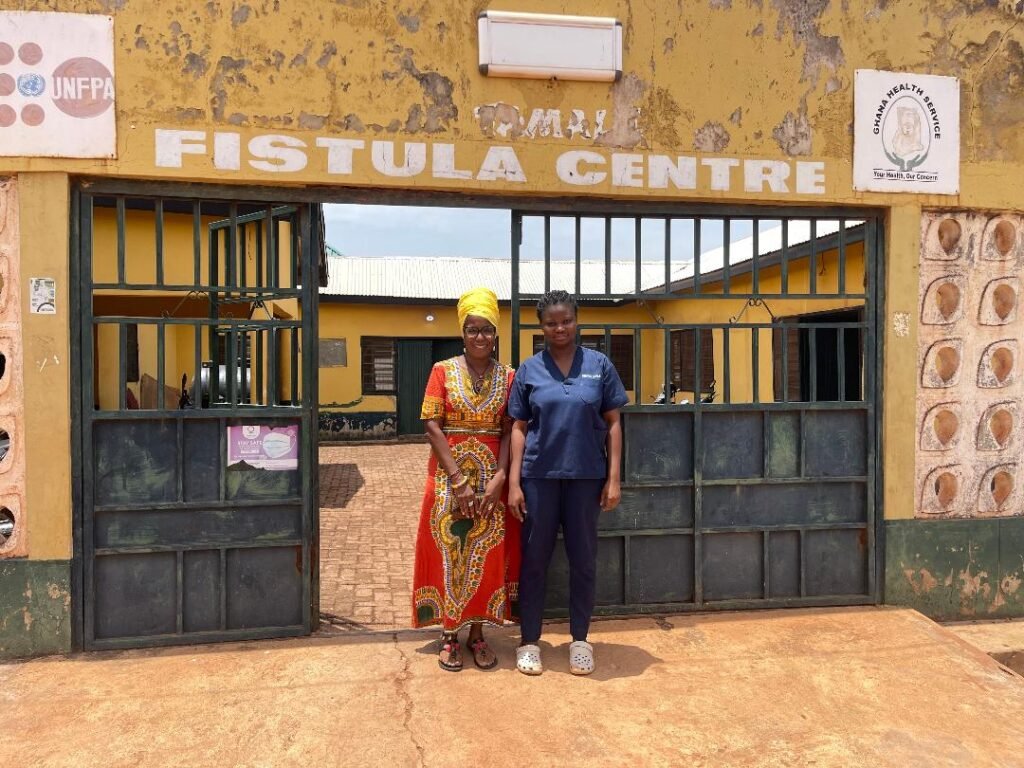
Obstetric fistula has been recognized as a medical condition for thousands of years, with some of the earliest records of the condition dating back to ancient Egypt. Obstetric fistula is one of several outcomes of a prolonged and obstructed childbirth, in which emergency medical care is unavailable to the laboring woman, for reasons including poverty and a lack of timely access to medical facilities. The woman affected by obstetric fistula constantly drips urinary and fecal waste from her private parts. She is usually shunned and abandoned by her husband, close relatives and community due to her offensive smell. Globally, it is estimated that there are 3 million women suffering from obstetric fistula mostly in Africa, Asia and the Middle East.
Obstetric fistula was once an issue in the Western world, but was eradicated by the early 20th century due to medical innovation, and widespread access to midwifery and other forms of obstetric care. However, there is a little known history of how enslaved black women in America gave rise to the current surgical procedure that is used to treat obstetric fistula patients today. Anarcha, Betsey and Lucy were enslaved on the Wescott plantation in Alabama. All three suffered from obstetric fistula, significantly reducing their productivity and reproductive ability in a system of chattel slavery that required the complete labor productivity of black people in order to function, in addition to the reproductive labor of black women in order to perpetuate itself. Certainly, the condition of these three women was not only a nuisance to master Westcott, but also resulted in a loss of profit for him.
When gynecologist, James Marion Sims arrived on the scene with an offer to cure the three women if successful with his medical experiments, Westcott was most inclined to release them to Sims. And so began a series of torturous medical experimentation on the bodies of Anarcha, Lucy and Betsey. In 1845, the young slave girl, Anarcha who was 17-years-old, at the time gave birth to a stillborn baby after three days in labor. The result of her agonizing labor was an obstetric fistula—a hole between the vagina and bladder, or rectum.
Anarcha suffered two fistulas—one between her vagina and bladder, and one between her vagina and rectum. Between 1846 and 1849, Sims conducted his series of experiments on enslaved women who were afflicted by obstetric fistula. It is reported that he operated on a total of 12 enslaved women; however only the names of Anarcha, Betsey and Lucy are known. Initially Sims was not successful with the surgeries, which is why they lasted over the course of three years. Though, in 1846 after his 30th operation on Anarcha, he was successful in closing her fistula. This success would gain Sims much praise and notoriety in the medical field, leading to him being dubbed “the father of modern gynecology.”
In the years to come, Sims would establish a women’s hospital in New York City where he operated on the fistulas of white women with the use of anesthesia—a sharp contrast to his treatment of enslaved women like Anarcha who were forced to undergo the excruciating operations with nothing to relieve their suffering. Sims held the pervasive belief that black women like Anarcha, Betsey and Lucy had a naturally high pain tolerance and could therefore bear the pain.
In the 1970’s researchers and activists began to question Sims real intentions towards the enslaved women and if it was truly fitting for him to be credited as, “the father of modern gynecology.” Over time, scholars and activists have put to bed former claims that the women had consented to the experimental procedures, for the mere reason that they were slaves, property, existing in a system that did not seek or require the permission of its subjects. The issue of consent in Sims’ experiments had been given attention for too long as a way to absolve him of his inhumane treatment of black women.
The history of James Marion Sims’ medical experiments on Anarcha, Betsey, Lucy and other slave women, drives home the horrors of slavery, the inherent evil of it, and the tragedy these women had to endure in the name of medical innovation. It also underscores the importance of telling our own stories of black people and challenging narratives told by those who benefitted, and continue to benefit, from the legacy of the forced labor and cruel treatment of black people in the Americas. Today, we honor the memories of Anarcha, Betsey and Lucy, the forerunners—albeit not of their own free will—of modern gynecology.